A New Literary Prize to Support Emerging Disabled Writers

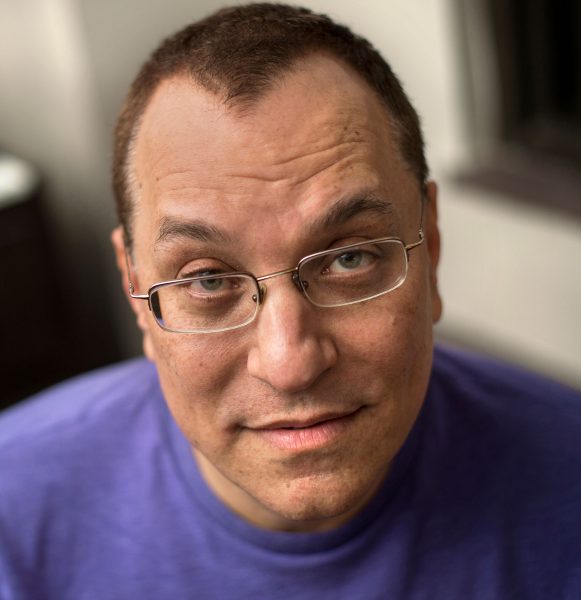 Kenny Fries; Image: Michael R. Dekker
By Erin L. Cox, Publisher | @erinlcox
Earlier this fall, award-winning writer and Disability Arts pioneer Kenny Fries announced that he was launching the Kenny Fries Disabled Writer Literary Award which seeks to elevate and amplify the work of emerging disabled and/or Deaf writers and support a new generation of writers get visibility and recognition.
“As a ‘pioneer’ of Disability Literature, as I age I’ve become increasingly concerned about the legacy of Disability Arts,” Fries says. “Historically, disabled writers have been marginalized and denied access to professional education and training, and the lack of disabled mentors has caused the link between generations of disabled writers to be too often lost. My hope is this annual award will assist a disabled writer of a younger generation to become more widely known both in the Disability Arts community as well as in the arts world at large.”

Cyrée Jarelle Johnson
The inaugural winner of the award, which was announced on September 22nd, is Cyrée Jarelle Johnson, a poet, rootworker, diviner, and clinical herbalist from Piscataway, New Jersey. He is the author of several books, chapbooks, and zines including WATCHNIGHT and SLINGSHOT. He was awarded $1000 in prize money to support his work.
“In a world where disabled writers are more likely to be written about by caretakers than published themselves,” Johnson says, “I’m grateful to be the first recipient of the Kenny Fries Award so I can continue to commit to my work.”
“I chose Cyrée Jarelle Johnson as the inaugural award recipient because his poems explode the boundaries of language, subject, and form,” Fries says. “His poems give us the opportunity to encounter those we usually do not meet in the pages of our poetry. He gives space to a wide array of people, places, and politics.”
Fries is an internationally acclaimed memoirist and poet, whose books include In the Province of the Gods; Body, Remember; Desert Walking; Anesthesia; and the groundbreaking anthology Staring Back: The Disability Experience from the Inside Out. Twice a Fulbright Scholar in Japan and Germany, he is a recipient of a Rockefeller Foundation Arts and Literary Arts Fellowship, and was a Creative Arts Fellow of the Japan/US Friendship Commission and the National Endowment for the Arts. He has received grants from the German Academic Exchange, Canada Council for the Arts, and the Berlin Senate Department for Culture and Europe. He is a Disability Futures Fellow of the Ford Foundation/Mellon Foundation/USA Artists.
Publishing Perspectives sat down with Fries to discuss his career, the award, and what the future looks like for writers with disabilities.
Publishing Perspectives: You have long been an advocate for writers with disabilities, what prompted you to create the Kenny Fries Disabled Writer Literary Award now?
KF: As I’ve aged, I’ve become increasingly focused on legacy, which I think is extremely important as much of disability history, both culturally and otherwise, is not known or has been erased. The past few years has seen the passing of many in the vanguard of disability rights and culture, including Marilyn Golden, Judy Heumann, Susan R. Nussbaum, and just in the last month Alice Wong, all of whom I considered mentors and friends. So it seemed important to begin this award now, especially since it started to honor my 65th birthday.
With the award comes some prize money, how does that monetary award impact the life of a writer?
For each of us, an award that includes money might mean something different. Due to society’s ableist structures, for many of us living with a disability can be a drain on both resources and time. Even a small amount of funding can free up both time to write or help in some way with what resources we have or do not have. I think each might use the funding differently depending on our life circumstances.
What has been the response from the disabled community for the award and the selection of Cyrée for the inaugural award?
I’ve been buoyed by the response from those I know in the disability community. I’ve received heartfelt emails from some who I know who think such an award is important. Many have expressed their excitement about the choice of Cyrée as the recipient of the inaugural award.
How has the larger literary world responded to the award?
It was nice to see that some media of the larger literary world paid some attention to the launch of the award (there were some articles in Literary Hub, Kirkus, and such). But it seems there should be more attention paid to such an award by the literary world, especially in the current sociopolitical climate, and especially since COVID disproportionally affected, and still affects, disabled people.
What do you hope this award and attention will do for other differently-abled writers – will it help more potential writers take a chance?
My hope is this award will bring some attention to the fact that disabled writers have something important to say that enriches all of us–disabled and nondisabled alike–and moves our literature culture forward both in form and content. And I hope it brings to the attention of disabled writers other disabled writers whose work they might not yet be familiar with.
About the Author
Source link