
Philippa Gregory’s Favourite Classic Novels – and the Canadian Author She Just Discovered
Ambition, love, gossip and betrayal.
Oh…and owls.
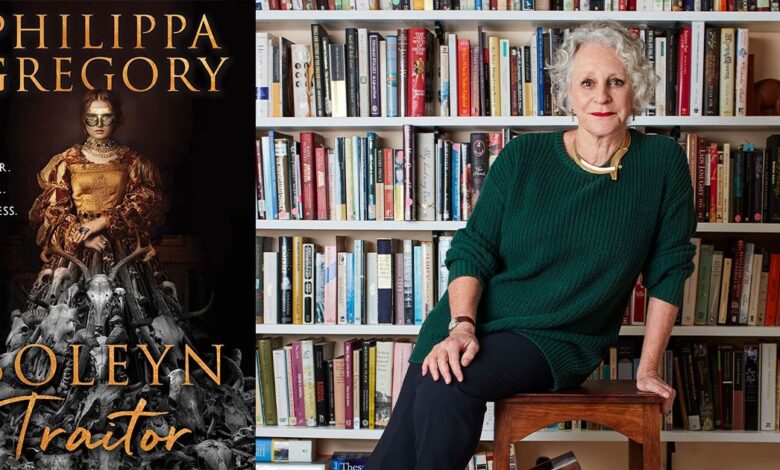
All is on the agenda when you snag a moment with Philippa Gregory, the queen of historical fiction. With umpteenth books under her belt, and a menagerie to call her own, she lives in the British countryside with four horses, many hens and ducks, and numerous birds of prey.
Gregory, in fact, has an “owl sanctuary,” she tells me, allowing the creatures what she calls a soft release, “I must have had 30 owls that I have released.” To which, I point out: “As many books!”
“You’re right,” she dings, eyes dancing.
She has recently released Boleyn Traitor – although not so-softly, because a Gregory novel is always an event. Returning to the Tudor court – familiar terrain for the trained historian – she tells the story of Lady Jane Rochford, a lady-in-waiting, the wife of George Boleyn and sister by marriage to one Queen of England. She was executed for treason in 1542 by Henry VIII, and is oft-remembered for her role in the investigations that led to the executions of her husband and sister-in-law Anne Boleyn.
While Jane Boleyn could have easily stayed in the shadows of the court, “where secrets are currency, every choice is dangerous.” In the hands of Gregory, she is seemingly rescued from the chorus line of history. Brought centre stage. “She had been on my mind,” Gregory explained, “because when I first encountered her in The Other Boleyn Girl [Gregory’s best-known book, famously turned into a film with Natalie Portman and Scarlett Johansson], I rather accepted the history around her … a very negative picture.”
In the 25 years since, “the history has literally changed.” Her task as a conjurer of the past? To look anew at the lady.
Gregory often does this by employing the female lens. As one reviewer once put it, “Philippa’s great gift is an ability to take history traditionally seen through the prism of politics and warfare and write it from the perspective of its strongest, most charismatic women.”
Not that it doesn’t involve some compartmentalizing, given how immersed she can get with her characters. “I do live with them,” she says, adding, “My mental health depends on me staying grounded in the real world – riding, looking after my dogs, spending time with grandchildren…friends.”
I don’t think you write well if you become obsessed with or fall in love with your characters,” she makes a point of saying, however. “You have just got to be alongside them. Otherwise, you end up writing fan fiction or hagiography.”
What are the books that shaped her own powers of imagination? And others that remain in her radar? We followed up.
What’s the best book you’ve read this year?
I’ve been reading Molly Keane. [The late] Irish novelist. She writes about the Anglo-Irish aristocracy, between the wars. There are a lot of horses in it; there’s a lot of hunting. It’s literally a society that is gone, and it’s completely fascinating! For me, it’s very escapist literature. She is a very fine novelist and good social observer. I’ve read four or five books of hers.
I’m also reading a lot for research – so I have read a tremendous number of books, as always, about the Tudor period. This year, I read a book [about that period] called Spycraft by Nadine Akkerman and Pete Langman, which is about different spy masters, and different spying techniques, which is very niche.
What book can’t you wait to dive into?
I discovered Emma Donoghue this year. I haven’t read all of her yet, so she remains on my to-do list.
What’s your favourite book of all time?
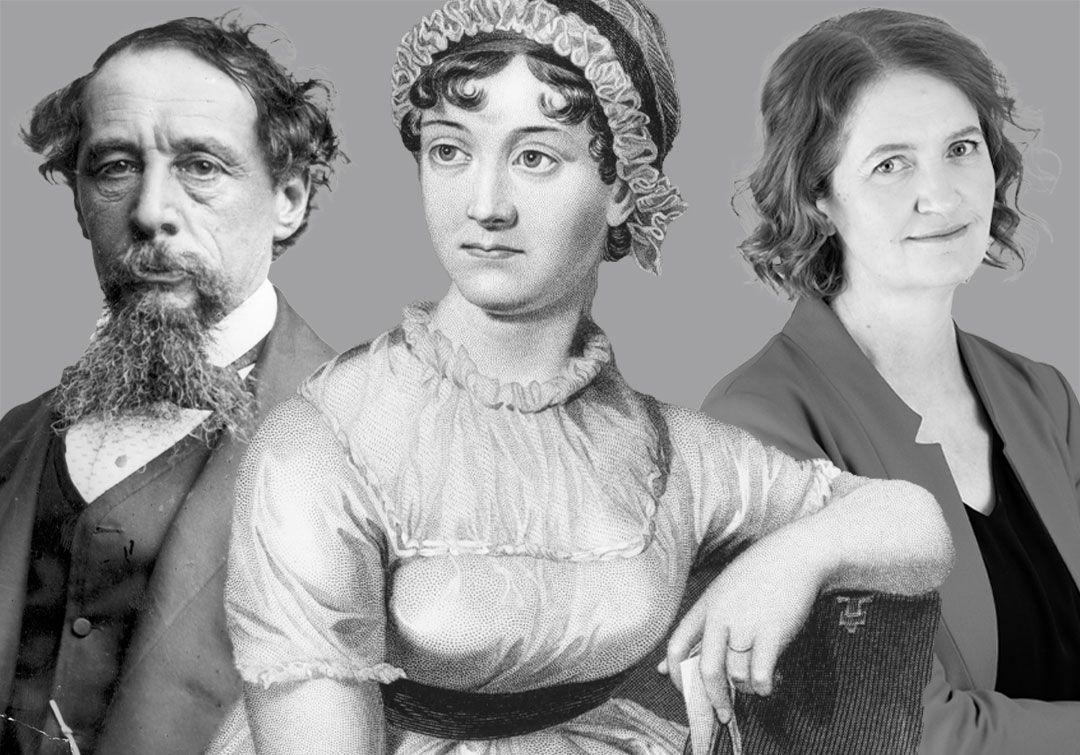
All of Jane Austen. All of E.M. Forster. Most of Charles Dickens. I mean, the classics – it’s so boring to cite that in my interview, but they’re classics for a reason.
I do read and re-read The Country and the City by Raymond Williams, which is non-fiction. A wonderful survey of the myth of the innocent countryside and the corrupt city. He is a great historian of cultural change. I first read him in university. It’s a non-fiction book, but it’s written with a great deal of emotion. Beautifully written. An author writing with real passion.
What book completely changed your perspective?
The Tree That Sat Down by Beverley Nichols. I read it so young, I was not sure if it was true or not. It’s about a very animated forest where the trees are alive. There is something absolutely enchanting about believing in magic, and this is a book about magic.
If you could have dinner with any author, living or dead, who would it be?
This question assumes that the best part of an author is their presence – wherein I think the best part of me is my books. You’re much better reading my books than having dinner with me!
But, having said that, if we could broaden the question to having dinner with a historical figure, I would like to have dinner with Richard III.
Source link


